Vladimir Nabokov
Russian-American novelist, lepidopterist, professor
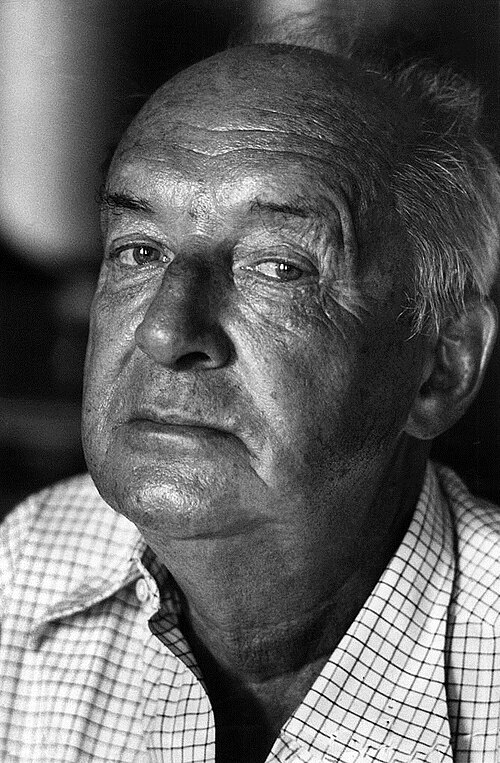
Born:April 10, 1899
Died:July 2, 1977
Age at death:78
Manner of death:Natural Causes
Cause of death:Disease
Zodiac Sign:Aries
Born in:Saint Petersburg, Russia
Residence:Paris, France
Buried in:Switzerland
Languages:French, English, Russian
Signature

Famous For
Notable Work
Books
Awards
Vladimir Nabokov
Russian-American novelist, lepidopterist, professor
Biography
This biography uses content from the Wikipedia article “Vladimir Nabokov”, available under the Creative Commons Attribution-ShareAlike 4.0 License.
Quotes
“And there are things that are hard to talk about—you'll rub off their marvelous pollen at the touch of a word.”
— Letter to then-girlfriend Véra (26 July 1923); in Letters to Véra (2014), p 3.
“What is this jest in majesty? This ass in passion? How do God and Devil combine to form a live dog?”
— Despair [Отчаяние (Otchayanie)] (1936).
“Commonsense has trampled down many a gentle genius whose eyes had delighted in a premature moonbeam of some rarer truth; commonsense has back-kicked dirt at the loveliest of queer paintings because a blue tree seemed madness to its well-meaning hoof.”
— "The Creative Writer", a talk presented on at the New English Modern Language Association, Simmons College, Boston (December 6, 1941); published in the NEMLA Bulletin 4, no. 1 (January 1942), pp. 21–29; republished in Brian Boyd and Anastasia Tolstoy, eds., Think, Write, Speak: Uncollected Essays, Reviews, and Letters to the Editor (New York: Alfred A. Knopf, 2019)
Quotes sourced from the Wikiquote article "Vladimir Nabokov", available under the Creative Commons Attribution-ShareAlike 4.0 License.
Photos
Vladimir Nabokov
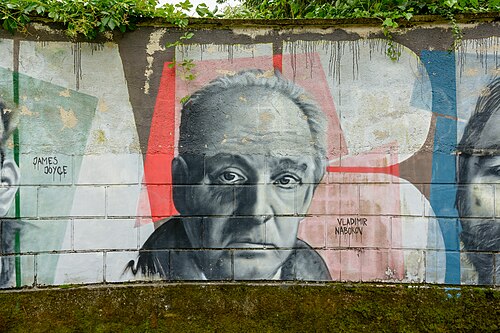
Graffiti of Vladimir Nabokov in Opatija
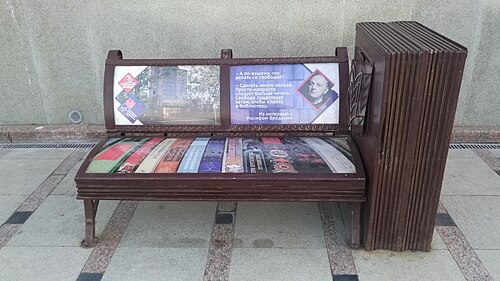
Benko kun citaĵo de Nabokov. Tjumeno, Rusio.
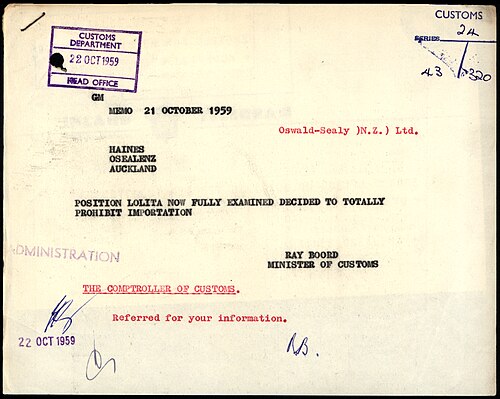
On 6 December 1953 Russian author Vladimir Nabokov completed his novel "Lolita", five years after starting it. The novel is famous for its style and infamous for its subject: the main character, middle-aged Humbert Humbert, becomes obsessed and sexually involved with a 12 year old girl named Dolores Haze. "Lolita" was banned in New Zealand by the Minister of Customs in 1959, against the advice of his own literature committee, which recommended the sale of the book be permitted, provided booksellers exercised discretion. The Minister of Customs, Mr Boord, at first offered no reason for his decision to ban the novel, providing only a curt telegram (shown above). It was only until he was pressed that he claimed the novel would breach the Indecent Publications Act if it were allowed in New Zealand. Following the ban, the New Zealand Council of Civil Liberties imported the novel into New Zealand in order to challenge this ban through the Supreme Court. Unusually, the Government agreed to cover the legal costs involved with the case. The appeal lost in the Supreme Court on the basis that the book placed excessive accent on matters of sex. The Supreme Court decision was appealed to the Court of Appeal but the ban was upheld by a majority decision. It was not until 1964 that the classification on Lolita in New Zealand was lifted, following a submission to the Indecent Publications Tribunal. Today, Lolita is a considered a classic of modern literature, and sits alongside other famously banned novels, such as J.D. Salinger's The Cather in the Rye, and Joyce's Ulysses. This telegram comes from a file regarding tariffs on prohibited literature, created by the New Zealand Customs Office. Archives Reference: ACIF 16554 W1786 Box 169 24/43/320 www.archway.archives.govt.nz/ViewFullItem.do?code=9294851 For updates on our On This Day series and news from Archives New Zealand, follow us on Twitter www.twitter.com/ArchivesNZ Material from Archives New Zealand
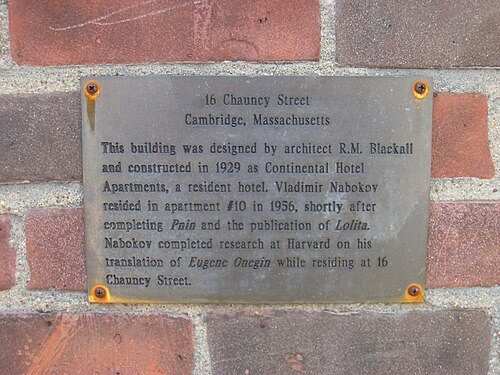
Vladimir Nabokov plaque, Cambridge, Massachusetts, USA.
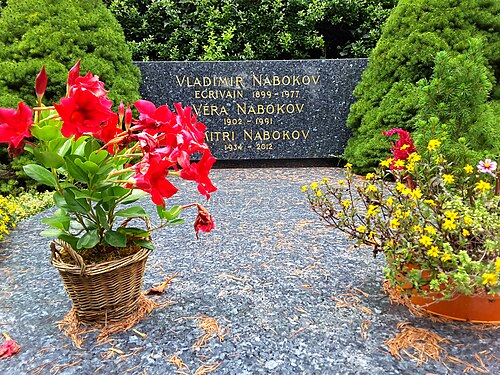
Détail de la tombe de l'écrivain Vladimir Nabokov, au cimetière de Clarens (Montreux) en Suisse.
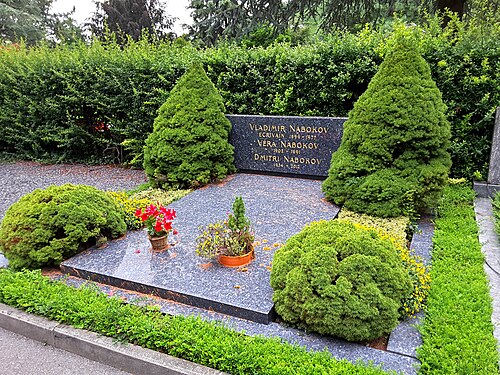
La tombe de l'écrivain Vladimir Nabokov au cimetière de Clarens (Montreux) en Suisse.
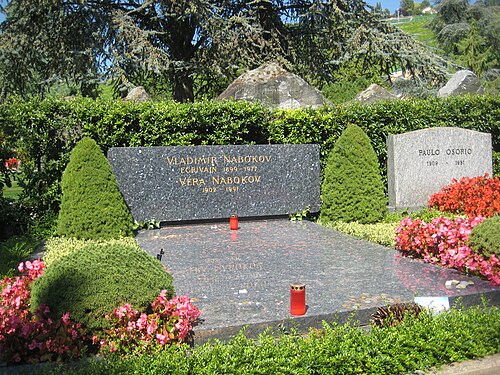
the grave of Vladimir Nabokov (Russian-American writer) and his wife Vera Nabokova in Cimetière de Clarens (Switzerland)
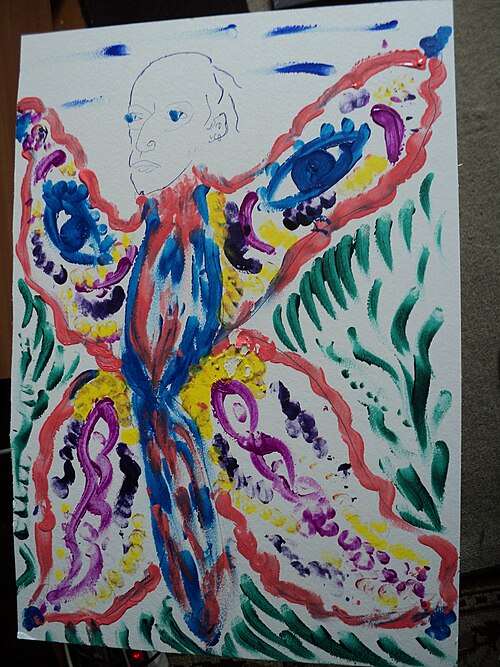
Набоков в виде бабочки. Рисунок Нины Горлановой.
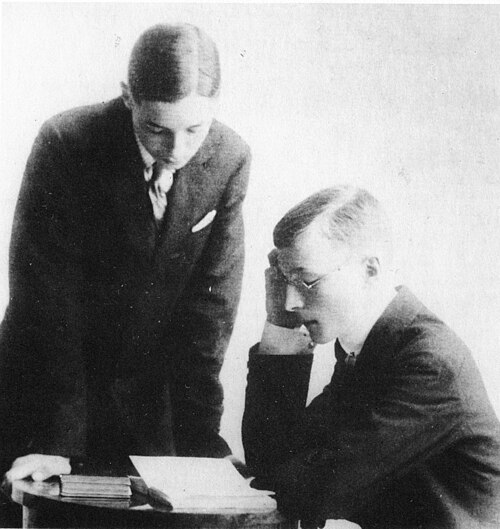
Vladimir (standing) and Sergei Nabokovs in St. Petersburg 1916.