
Leonardo da Vinci
Italian Renaissance polymath (1452−1519)
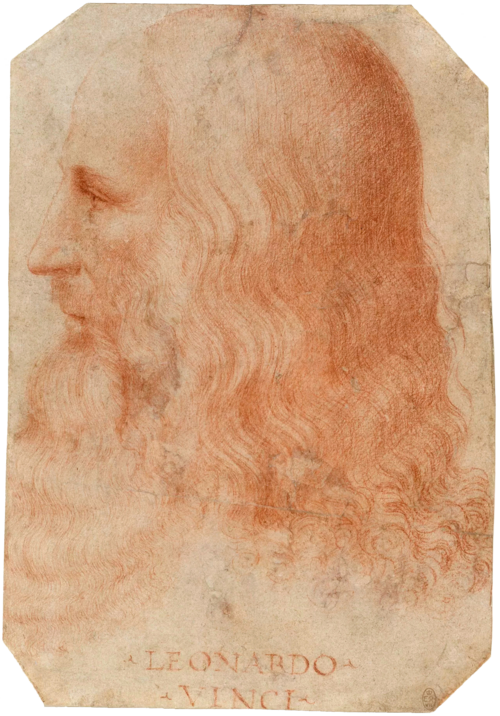
Signature

Famous For
Notable Work
Books
Leonardo da Vinci
Italian Renaissance polymath (1452−1519)
Biography
This biography uses content from the Wikipedia article “Leonardo da Vinci”, available under the Creative Commons Attribution-ShareAlike 4.0 License.
Quotes
“Painting is poetry which is seen and not heard, and poetry is a painting which is heard but not seen. These two arts, you may call them both either poetry or painting, have here interchanged the senses by which they penetrate to the intellect.”
— A Treatise on Painting (1651); "The Paragone"; compiled by Francesco Melzi prior to 1542, first published as Trattato della pittura by Raffaelo du Fresne (1651)
“Oysters open completely when the moon is full; and when the crab sees one it throws a piece of stone or seaweed into it and the oyster cannot close again so that it serves the crab for meat. Such is the fate of him who opens his mouth too much and thereby puts himself at the mercy of the listener.”
— As quoted in The 48 Laws of Power (2000) by Robert Greene, p. 33
“The painter strives and competes with nature...There is nothing in all nature without its reason. If you know the reason, you do not need the experience...”
Quotes sourced from the Wikiquote article "Leonardo da Vinci", available under the Creative Commons Attribution-ShareAlike 4.0 License.
Photos
Leonardo da Vinci
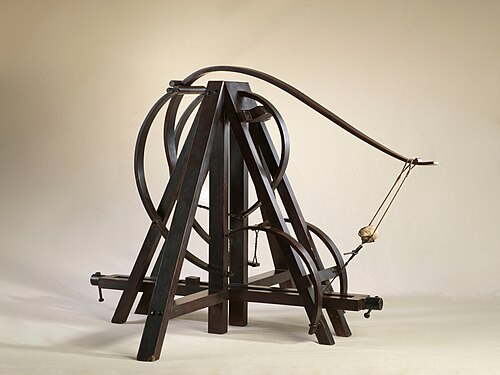
Ogetto fotografato per la mostra Leonardo da Vinci. La scienza prima della scienza
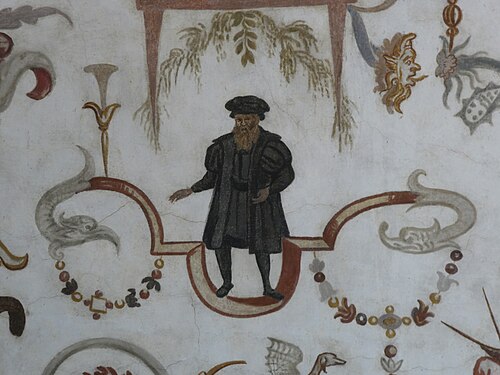
Caprino Veronese (Veneto, Italy) - Villa Carlotti - Frescos of the Sala dei Sogni - Leonardo da Vinci
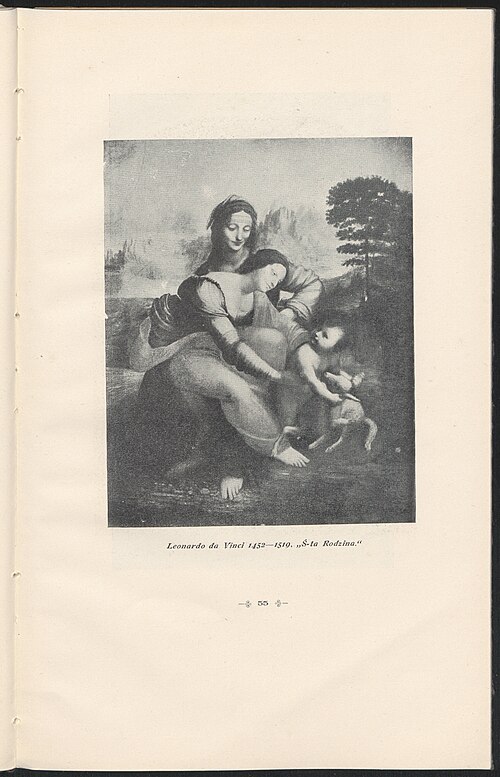
Adres wydawniczy: Warszawa : B. Wierzbicki, 1901 Opis fizyczny: 64 s. ; 27 cm
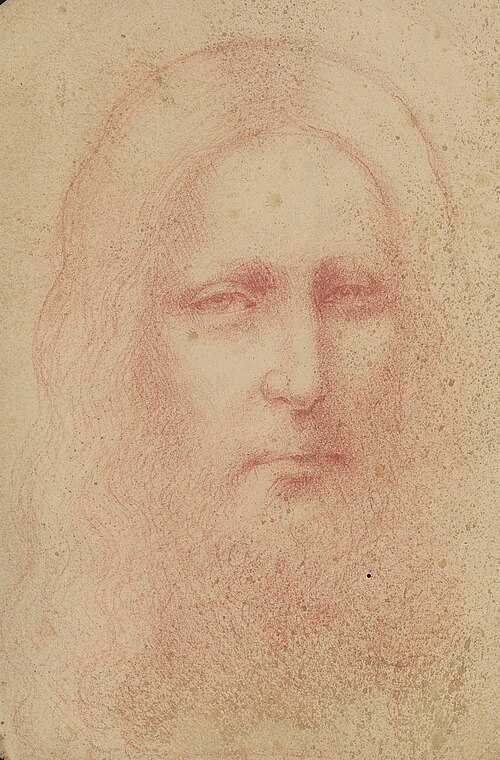
Potrait of Lecco, Leonardo da vinci
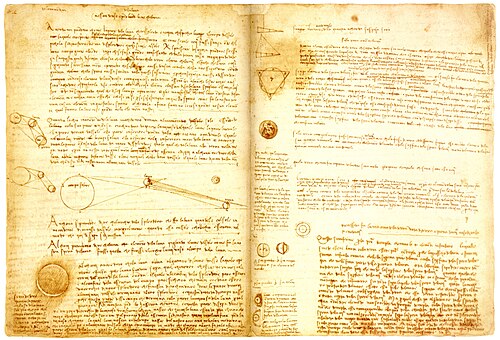
Vinci Hammer Image
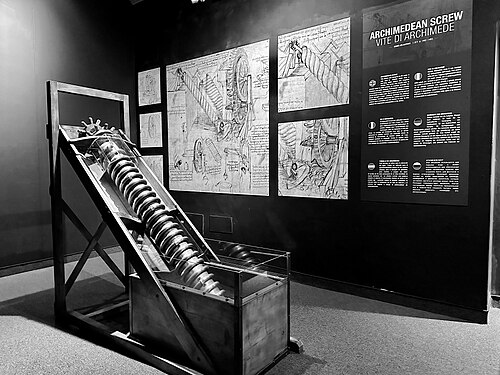
The Archimedes' screw, on display at the Leonardo Interactive Museum, is a fascinating example of ancient hydraulic engineering. Although often attributed to Archimedes himself (3rd century BC), Leonardo da Vinci extensively studied and documented its mechanics, as evidenced by his detailed drawings found in the famous Codex Atlanticus. This ingenious device works by using a helical screw that rotates inside a tube, effectively lifting liquids from a lower to a higher elevation. Its enduring effectiveness is clear even today, as Archimedes' screws are still utilized for irrigation, in wastewater treatment plants, and even for low-head hydroelectric power generation. This timeless invention continues to demonstrate the brilliance of its original design and Leonardo's keen insight into its principles.
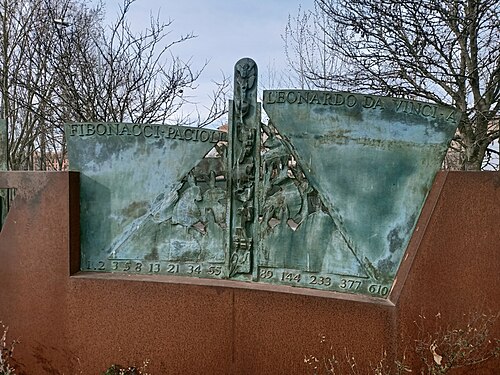
escultura Elogi del Pensament Creador davant l'Atlàntida
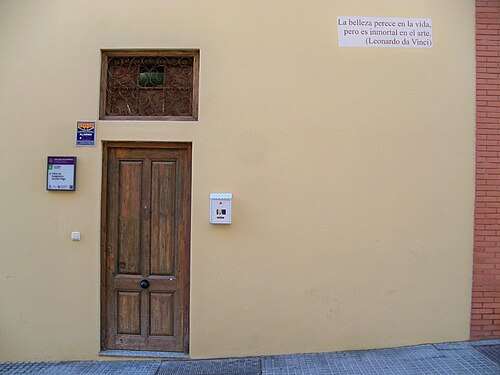
Cita de Leonardo da Vinci en la fachada lateral del taller de imaginería de Juan Vega, en el número 1 de la calle Poeta Concha Méndez. El texto dice: «La belleza perece en la vida, / pero es inmortal en el arte. (Leonardo da Vinci)».
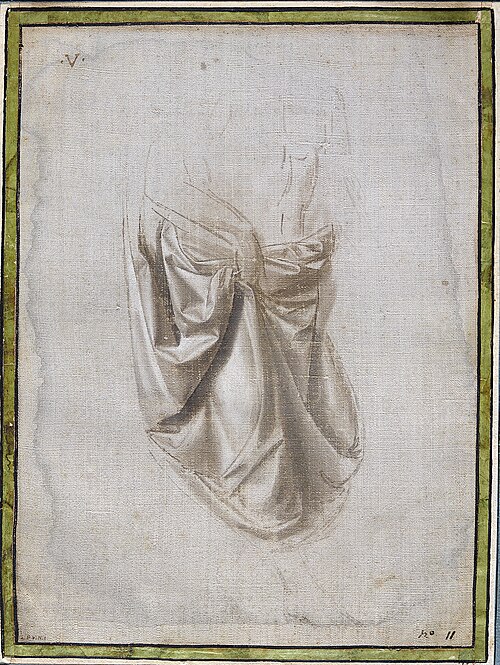
Draperie pour une figure debout, se dirigeant vers la droite 28.3 x 21 - Pinceau, encre grise, papier (blanc) - 15e