George Orwell
British writer and journalist
Born:June 25, 1903
Died:January 21, 1950
Age at death:46
Manner of death:Natural Causes
Cause of death:Tuberculosis
Zodiac Sign:Cancer
Height:1.88 m (6′2″)
Children:1
Born in:Motihari, India
Residence:France, France
Buried in:United Kingdom
Languages:English, French
Signature

Famous For
Notable Work
Books
Awards
George Orwell
British writer and journalist
Biography
This biography uses content from the Wikipedia article “George Orwell”, available under the Creative Commons Attribution-ShareAlike 4.0 License.
Quotes
“This means no more than vae victis - woe to the creed that is not backed by machine-guns!”
— Review of The Two Carlyles by Osbert Burdett, in The Adelphi (March 1931)
“As to a pseudonym, a name I always use when tramping etc is P. S. Burton, but if you don't think this sounds a probable kind of name, what about Kenneth Miles, George Orwell, H. Lewis Allways. I rather favour George Orwell.”
— Letter to Leonard Moore (19 November 1932); The Collected Essays, Journalism & Letters, George Orwell: An Age Like This, 1920–1940, Editors: Sonia Orwell, Ian Angus. p. 106.
“Man is not a Yahoo, but he is rather like a Yahoo and needs to be reminded of it from time to time.”
— Review of Tropic of Cancer, in New English Weekly (14 November 1935)
Quotes sourced from the Wikiquote article "George Orwell", available under the Creative Commons Attribution-ShareAlike 4.0 License.
Photos
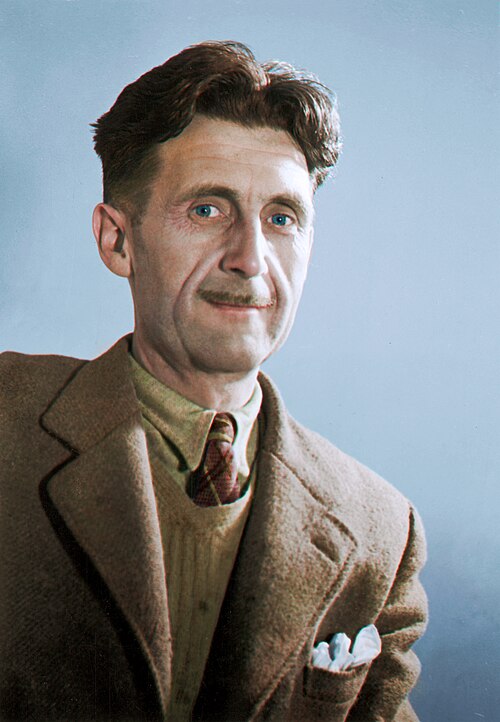
George Orwell was the pen name of Eric Arthur Blair (1903 - 1950), an English writer born in British India. On of his first jobs was acting as imperial police officer in Burma, but resigned to it in 1928, because of anticolonial and antiracist feelings. Almost ten years later, in 1936, he moved to Spain and joined the Republican militia, serving in the surroundings of Osca as second lieutenant during the first steps of the Spanish Civil War. After being wounded at Teruel, he fought against communist insurgents trying to overthrow their political opponents in Barcelona. Disappointed by the position of the Republic and the rise of Stalinism, Orwell returned to England and never joined the International Brigades. His dairy was lost in Spain, as well as his camera and photographs, but he would later write Homage to Catalonia, as a report of the conflict. With the outcome of World War II, he was rejected for military service; so he headed the Indian service of the British Broadcasting Corporation. The next years he would write his most famous works, Animal Farm and Nineteen Eighty-Four. #historiansunion #colorizersunion #colored #colorized #colourised #colorization #colourisation #color #history #worldwar2 #ww2 #wwii #georgeorwell #literature
Relax
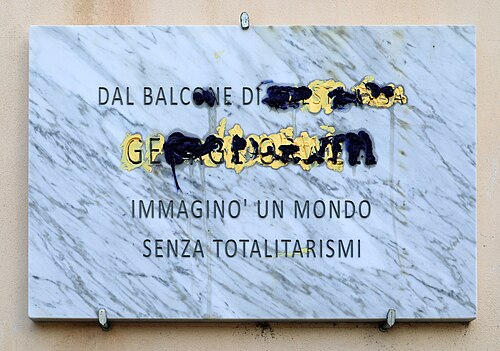
Piazza XXVII Aprile (Carrara)
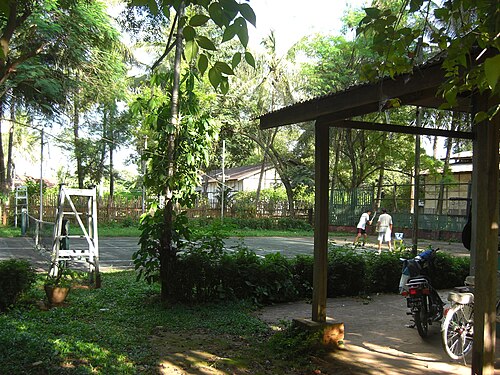
The tennis club in Katha, Burma that is featured in George Orwell's Burmese Days
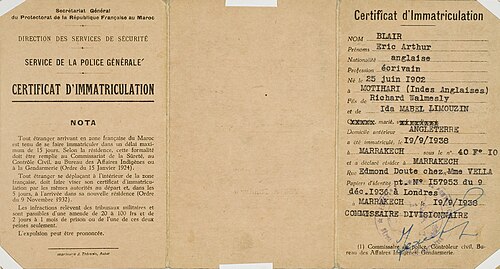
Back of an identity card belonging to George Orwell in Morocco
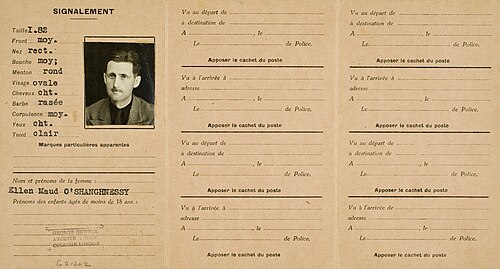
Front of an identity card belonging to George Orwell in Morocco
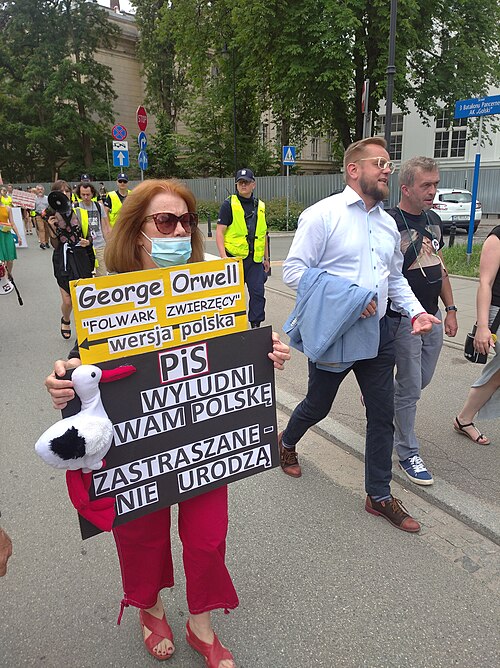
Marsz antyrządowych demonstrantów w stronę sejmu.
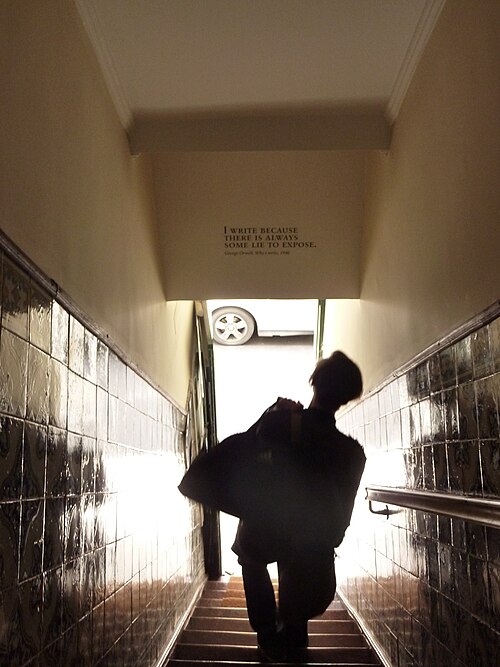
George Orwell
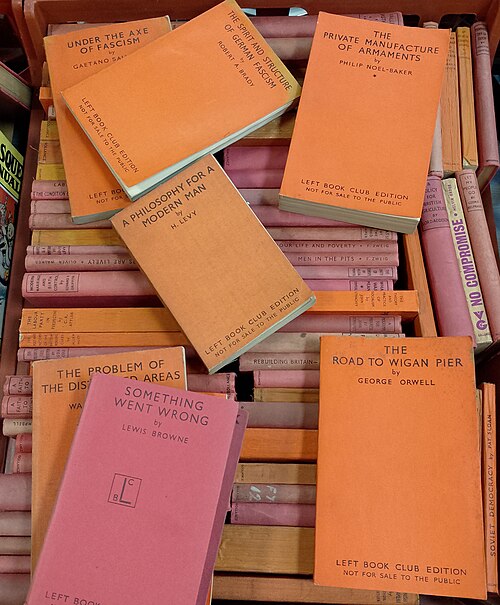
Left Book Club books

George Orwell and Eileen O’Shaughnessy with members of the ILP unit on the Aragon Front outside Huesca, 13th March 1937