
Danny Kaye
American actor, singer, dancer, and comedian
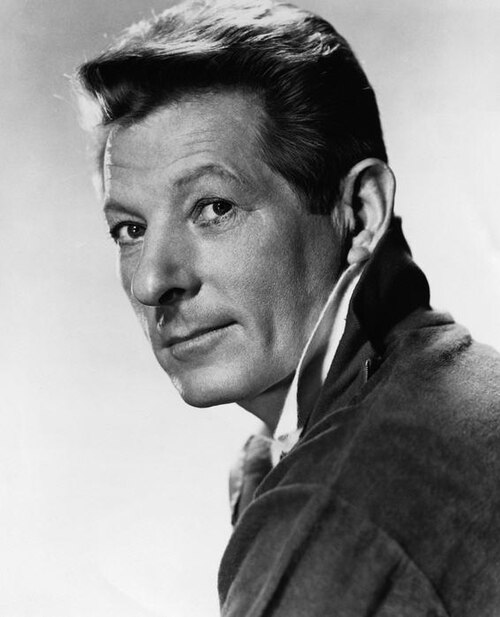
Born:January 18, 1911
Died:March 3, 1987
Age at death:76
Manner of death:Natural Causes
Cause of death:Hepatitis
Zodiac Sign:Capricorn
Height:1.80 m (5′11″)
Children:1
Born in:Brooklyn, United States
Buried in:United States
Languages:English
Famous For
Movies & TV
Songs & Albums
Awards
 Presidential Medal of Freedom (1987)
 Knight of the Legion of Honour (1986)
 Kennedy Center Honors (1984)
Danny Kaye
American actor, singer, dancer, and comedian
Biography
This biography uses content from the Wikipedia article “Danny Kaye”, available under the Creative Commons Attribution-ShareAlike 4.0 License.
Quotes
“Civilization? I'll stay right here [in the Congo]!”
— "Civilization (Bongo, Bongo, Bongo)" (1947), Decca
“Referring to the contributions that his wife Sylvia Fine's songs made to his career”
— Leslie Halliwell (2001). Who's Who in the Movies. HarperCollins Entertainment. pp. 242 (of 593). ISBN 0002572141.
“I became an entertainer not because I wanted to but because I was meant to.”
— Leslie Halliwell (2001). Who's Who in the Movies. HarperCollins Entertainment. pp. 242. ISBN 0002572141.
Quotes sourced from the Wikiquote article "Danny Kaye", available under the Creative Commons Attribution-ShareAlike 4.0 License.
Photos
Danny Kaye. Studio publicity portrait. Copyright details Additional source information: This is a publicity photo taken to promote a film actor. As stated by film production expert Eve Light Honthaner in The Complete Film Production Handbook, (Focal Press, 2001 p. 211.): "Publicity photos (star headshots) have traditionally not been copyrighted. Since they are disseminated to the public, they are generally considered public domain, and therefore clearance by the studio that produced them is not necessary." Nancy Wolff, includes a similar explanation: "There is a vast body of photographs, including but not limited to publicity stills, that have no notice as to who may have created them." (The Professional Photographer's Legal Handbook By Nancy E. Wolff, Allworth Communications, 2007, p. 55.) Film industry author Gerald Mast, in Film Study and the Copyright Law (1989) p. 87, writes: "According to the old copyright act, such production stills were not automatically copyrighted as part of the film and required separate copyrights as photographic stills. The new copyright act similarly excludes the production still from automatic copyright but gives the film's copyright owner a five-year period in which to copyright the stills. Most studios have never bothered to copyright these stills because they were happy to see them pass into the public domain, to be used by as many people in as many publications as possible." Kristin Thompson, committee chairperson of the Society for Cinema and Media Studies writes in the conclusion of a 1993 conference with cinema scholars and editors, that they "expressed the opinion that it is not necessary for authors to request permission to reproduce frame enlargements. . . [and] some trade presses that publish educational and scholarly film books also take the position that permission is not necessary for reproducing frame enlargements and publicity photographs."[1]
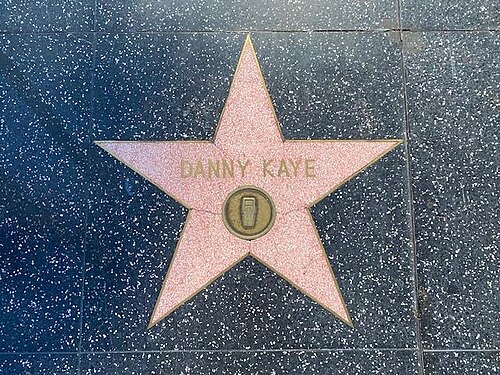
Kaye's star on the Hollywood Walk of Fame.
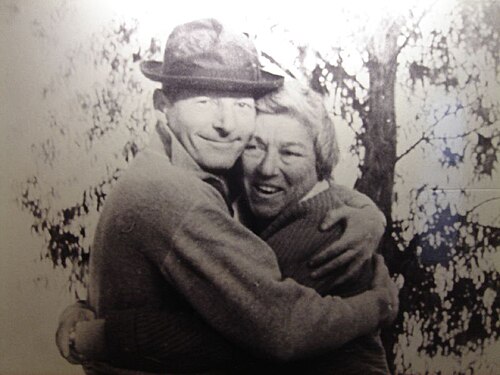
Danny Kaye with Lotte Eisenberg, manager of Galei Kinneret (from the Galei Kinneret hotel historical exhibition)
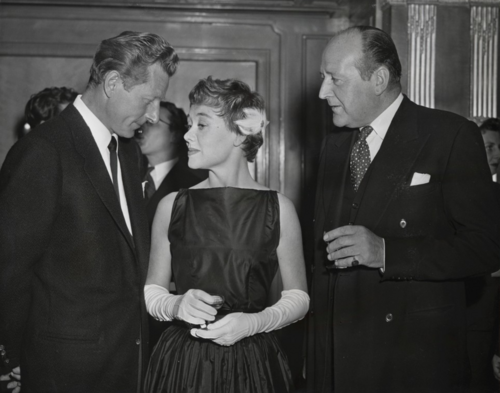
Actors Glynis Johns, Danny Kaye and Cecil Parker at Dorchester Reception
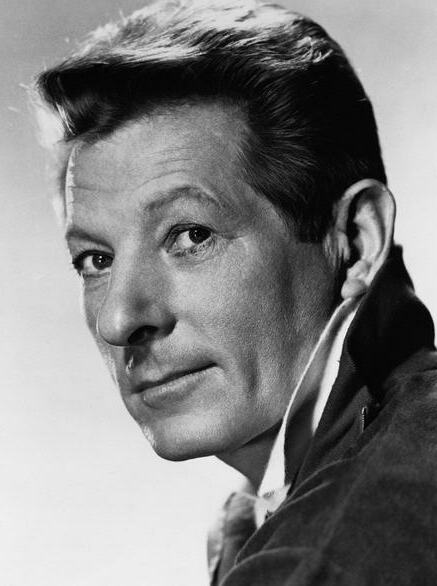
Danny Kaye. Studio publicity portrait. Copyright details Additional source information: This is a publicity photo taken to promote a film actor. As stated by film production expert Eve Light Honthaner in The Complete Film Production Handbook, (Focal Press, 2001 p. 211.): "Publicity photos (star headshots) have traditionally not been copyrighted. Since they are disseminated to the public, they are generally considered public domain, and therefore clearance by the studio that produced them is not necessary." Nancy Wolff, includes a similar explanation: "There is a vast body of photographs, including but not limited to publicity stills, that have no notice as to who may have created them." (The Professional Photographer's Legal Handbook By Nancy E. Wolff, Allworth Communications, 2007, p. 55.) Film industry author Gerald Mast, in Film Study and the Copyright Law (1989) p. 87, writes: "According to the old copyright act, such production stills were not automatically copyrighted as part of the film and required separate copyrights as photographic stills. The new copyright act similarly excludes the production still from automatic copyright but gives the film's copyright owner a five-year period in which to copyright the stills. Most studios have never bothered to copyright these stills because they were happy to see them pass into the public domain, to be used by as many people in as many publications as possible." Kristin Thompson, committee chairperson of the Society for Cinema and Media Studies writes in the conclusion of a 1993 conference with cinema scholars and editors, that they "expressed the opinion that it is not necessary for authors to request permission to reproduce frame enlargements. . . [and] some trade presses that publish educational and scholarly film books also take the position that permission is not necessary for reproducing frame enlargements and publicity photographs."[1]
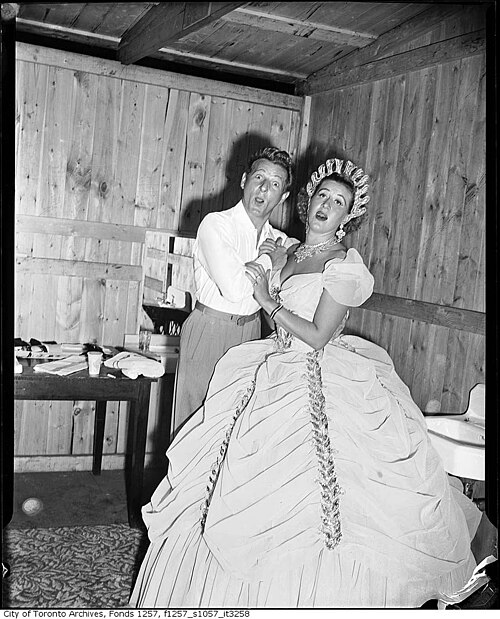
This image is available from the City of Toronto Archives, listed under the archival citation Series 1057, Item 3258. This tag does not indicate the copyright status of the attached work. A normal copyright tag is still required. See Commons:Licensing for more information.
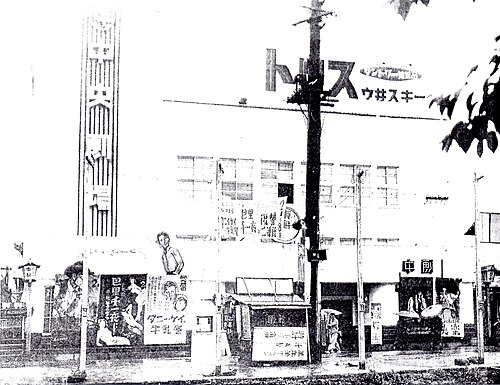
長野県松本市・中央劇場 昭和30年代