רוברט גייטס
פוליטיקאי אמריקאי, מנהל ה-CIA, מזכיר ההגנה ונשיא אוניברסיטה
חתימה

ידוע בזכות
סרטים וטלוויזיה
ספרים
פרסים
 מדליית החירות הנשיאותית (2011)
 מדליית החירות של פילדלפיה
 הצלב הגדול של מסדר השמש העולה
 מדליית האזרחים הנשיאותית
רוברט גייטס
פוליטיקאי אמריקאי, מנהל ה-CIA, מזכיר ההגנה ונשיא אוניברסיטה
ביוגרפיה
ביוגרפיה זו משתמשת בתוכן מתוך ערך הוויקיפדיה “רוברט גייטס”, הזמין תחת רישיון Creative Commons Attribution-ShareAlike 4.0.
תמונות
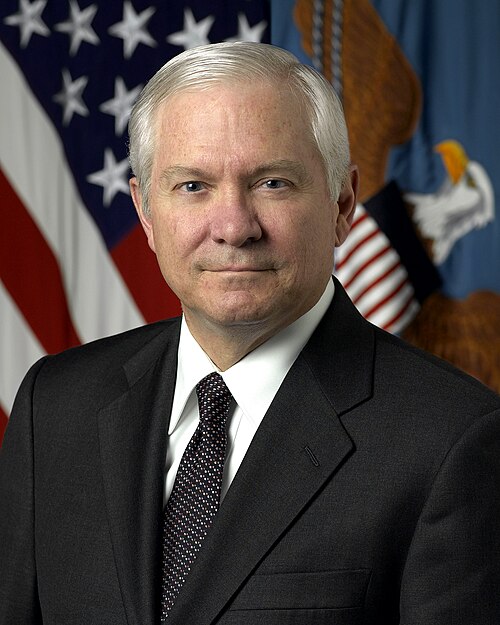
Official portrait of United States Secretary of Defense Robert Gates

Secretary of Defense Leon E. Panetta, right, and former Secretary of Defense Robert M. Gates, left, share a laugh at the portrait unveiling ceremony for Gates at the Pentagon on Oct. 29, 2012. Gates was the 22nd secretary of defense.
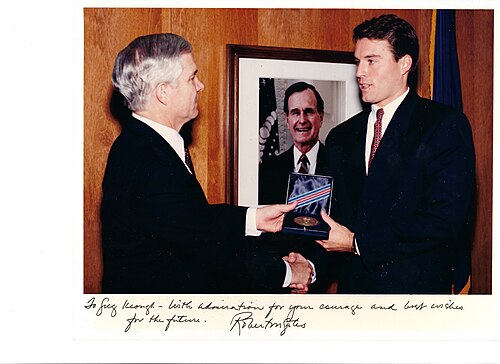
Ceremony at CIA Headquarters - Robert Gates awards Gregory Keough Intelligence Star for Extraordinary Heroism

Robert M. Gates, former Secretary of Defense, signs his new book “A Passion for Leadership” at the Marine Corps Exchange aboard Marine Corps Air Station Miramar, Calif., Feb. 1. Gates served as the 22nd Secretary of Defense from 2006 to 2011. (U.S. Marine Corps photo by Cpl. Alissa Schuning/Released) Unit: Marine Corps Air Station Miramar / 3rd Marine Aircraft Wing DVIDS Tags: United States; secretary of defense; MCAS Miramar; Robert Gates; APP49; Passion for Leadership

Robert M. Gates, former Secretary of Defense, signs his new book “A Passion for Leadership” at the Marine Corps Exchange aboard Marine Corps Air Station Miramar, Calif., Feb. 1. Gates served as the 22nd Secretary of Defense from 2006 to 2011. (U.S. Marine Corps photo by Cpl. Alissa Schuning/Released) Unit: Marine Corps Air Station Miramar / 3rd Marine Aircraft Wing DVIDS Tags: United States; secretary of defense; MCAS Miramar; Robert Gates; APP49; Passion for Leadership

Robert M. Gates, former Secretary of Defense, signs his new book “A Passion for Leadership” at the Marine Corps Exchange aboard Marine Corps Air Station Miramar, Calif., Feb. 1. Gates served as the 22nd Secretary of Defense from 2006 to 2011. (U.S. Marine Corps photo by Cpl. Alissa Schuning/Released) Unit: Marine Corps Air Station Miramar / 3rd Marine Aircraft Wing DVIDS Tags: United States; secretary of defense; MCAS Miramar; Robert Gates; APP49; Passion for Leadership

People wait for Robert M. Gates, former Secretary of Defense, to sign his new book, “A Passion for Leadership” at the Marine Corps Exchange aboard Marine Corps Air Station Miramar, Calif., Feb. 1. Gates served as the 22nd Secretary of Defense from 2006 to 2011. (U.S. Marine Corps photo by Cpl. Alissa Schuning/Released) Unit: Marine Corps Air Station Miramar / 3rd Marine Aircraft Wing DVIDS Tags: United States; secretary of defense; MCAS Miramar; Robert Gates; APP49; Passion for Leadership

People wait for Robert M. Gates, former Secretary of Defense, to sign his new book, “A Passion for Leadership” at the Marine Corps Exchange aboard Marine Corps Air Station Miramar, Calif., Feb. 1. Gates served as the 22nd Secretary of Defense from 2006 to 2011. (U.S. Marine Corps photo by Cpl. Alissa Schuning/Released) Unit: Marine Corps Air Station Miramar / 3rd Marine Aircraft Wing DVIDS Tags: United States; secretary of defense; MCAS Miramar; Robert Gates; APP49; Passion for Leadership
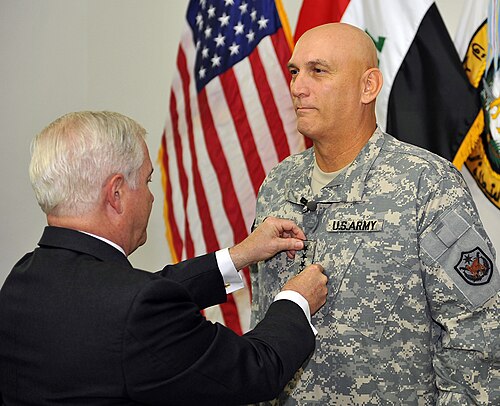
(Left to right) U.S. Defense Secretary Robert M. Gates promotes Army GEN Raymond Odierno prior to the Multi-National Force Iraq change of command at Camp Victory, Iraq, Tuesday Sep. 16, 2008. Secretary Gates is in Southwest Asia to meet with Iraqi and Afghan leaders and to preside over the changing of the Commanding General of Multi-National Force Iraq. (Defense Dept. photo by Tech. Sgt. Jerry Morrison) (CLEARED)
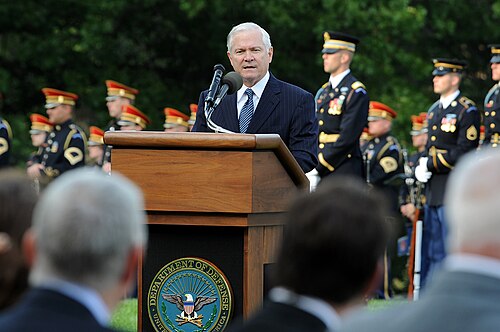
Defense Secretary Robert M. Gates addresses the audience during a military parade in honor of retiring U.S. Sens. John Warner and Duncan Hunter at Whipple Field on Fort Myer, Va., Sept. 24, 2008.
סרטונים
שאלות ותשובות על רוברט גייטס
מי זה רוברט גייטס?
רוברט גייטס הוא פוליטיקאי אמריקאי, מנהל ה-CIA, מזכיר ההגנה ונשיא אוניברסיטה.
בן כמה רוברט גייטס?
רוברט גייטס בן 83. הוא נולד ב-25 בספטמבר 1943.
איפה נולד רוברט גייטס?
רוברט גייטס נולד בויצ'יטה, ארצות הברית.
במה עוסק רוברט גייטס?
רוברט גייטס ידוע בעיקר בתור פוליטיקאי, קצין בחיל האוויר.