קרלוס השלישי, מלך ספרד
מלך ספרד
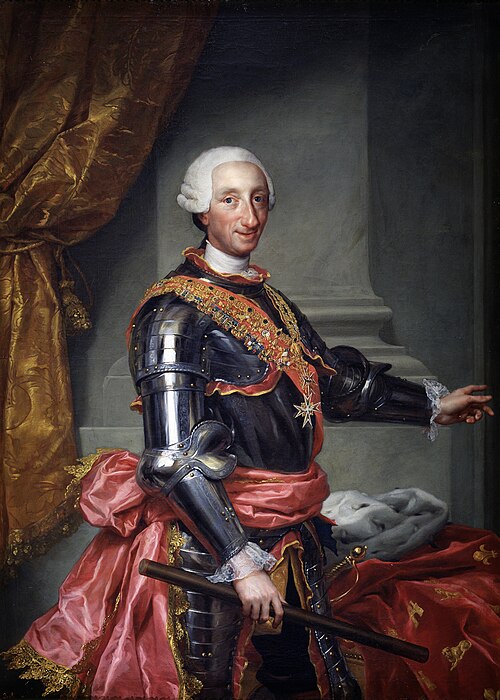
צילום: Anton Raphael Mengs · Public Domain · Wikimedia Commons
נולד:ינואר 20, 1716
נפטר:דצמבר 14, 1788
גיל בפטירה:72
מזל:דלי
נולד ב:מדריד, ספרד
מקום מגורים:הארמון המלכותי של מדריד, ספרד
מקום קבורה:ספרד
שפות:ספרדית, צרפתית
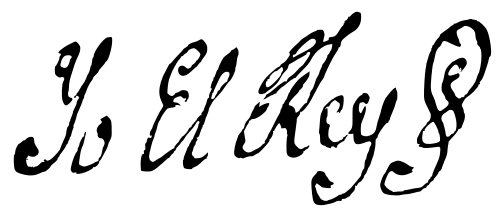
חתימה
קישורים
ידוע בזכות
ספרים
פרסים
קרלוס השלישי, מלך ספרד
מלך ספרד
ביוגרפיה
ביוגרפיה זו משתמשת בתוכן מתוך ערך הוויקיפדיה “קרלוס השלישי, מלך ספרד”, הזמין תחת רישיון Creative Commons Attribution-ShareAlike 4.0.
תמונות
Retrato del rey Carlos III de España (1716-1788), que fue hijo del rey Felipe V de España y de su segunda esposa, la reina Isabel de Farnesio.
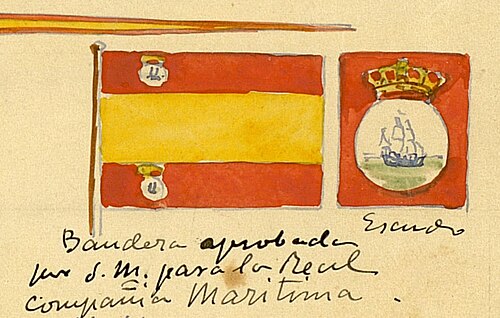
Flag designs presented by Antonio Valdés y Fernández Bazán, Minister of the Navy, to King Charles III of Spain in May 1785 upon his request for a flag allowing for easy identification of Spanish naval, and merchant vessels (as several territories used their royal coat of arms on a white field as their flag at the time, resulting in potential confusion or naval accidents). Hand-written under the first flag on the top row is "S.M. escogió esta para guerra" (His Majesty chose this [one] for war), while under the third flag on the top row is "S.M. escogió esta para la marina mercante" (His Majesty chose this [one] for the merchant navy). Starting half-way down the page are chosen designs for "gallardetes" (pennants), as well as the design for the flag of the "Real Compañía de Filipinas" (Royal Company of the Philippines) and "Real Compañía Marítima" (Royal Maritime Company). Definitive/final designs of the flags are present at the bottom of the page, officially implemented by Royal Decree on 28 May 1785. The war flag design would eventually become the basis for the current flag of the Kingdom of Spain, becoming official for "all the bodies and institutes that make up the army, navy and National Militia" by Royal Decree of the provisional government of Isabel II on October 13, 1843 (prior to this different units of the army often used different banners).
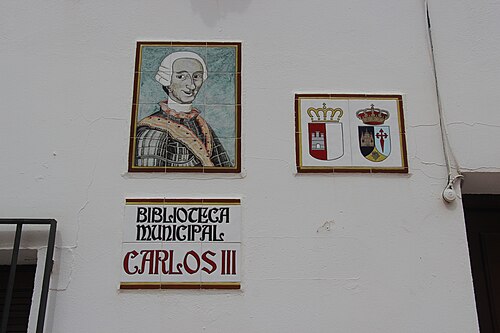
San Carlos del Valle is een gemeente in de Spaanse provincie Ciudad Real in de regio Castilië-La Mancha. Opname uit maart 2017.
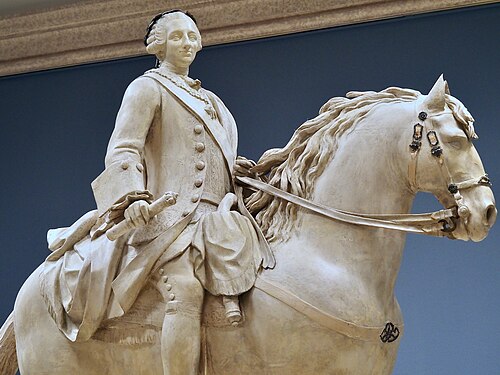
Juan Pascual de Mena / Manuel Álvarez de la Peña, "Charles III on Horseback", 1780 and after 1790. Wood covered with a thin layer of plaster, metal crown and fabric ties; 143 x 160 x 54 cm. Madrid, Royal Academy of Fine Arts of San Fernando, E-148. The horse and the king's body are believed to be the work of the sculptor Juan Pascual de Mena, as part of a 1778 model for an equestrian statue of King Philip V of Spain, while the current head, which represents Charles III instead of Philip V, is believed to be a later work by the sculptor Manuel Álvarez de la Peña, to adapt the old 1778 model to a different king after 1790. The equestrian monument to Charles III of Spain that can be seen today in Madrid's Plaza del Sol, commissioned by the city council in 1993, was cast in bronze based precisely on this 18th-century model.
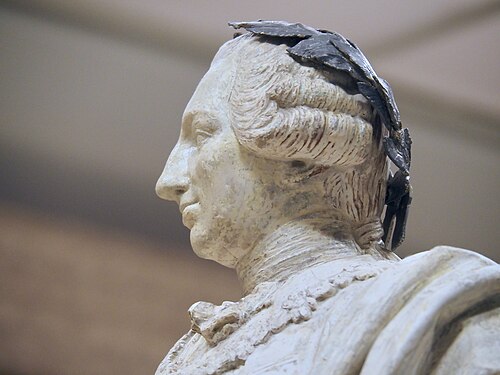
Juan Pascual de Mena / Manuel Álvarez de la Peña, "Charles III on Horseback", 1780 and after 1790. Wood covered with a thin layer of plaster, metal crown and fabric ties; 143 x 160 x 54 cm. Madrid, Royal Academy of Fine Arts of San Fernando, E-148. The horse and the king's body are believed to be the work of the sculptor Juan Pascual de Mena, as part of a 1778 model for an equestrian statue of King Philip V of Spain, while the current head, which represents Charles III instead of Philip V, is believed to be a later work by the sculptor Manuel Álvarez de la Peña, to adapt the old 1778 model to a different king after 1790. The equestrian monument to Charles III of Spain that can be seen today in Madrid's Plaza del Sol, commissioned by the city council in 1993, was cast in bronze based precisely on this 18th-century model.
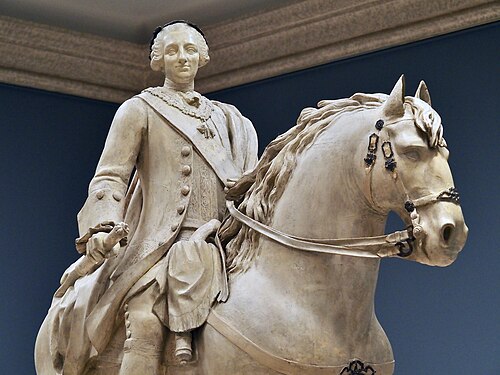
Juan Pascual de Mena / Manuel Álvarez de la Peña, "Charles III on Horseback", 1780 and after 1790. Wood covered with a thin layer of plaster, metal crown and fabric ties; 143 x 160 x 54 cm. Madrid, Royal Academy of Fine Arts of San Fernando, E-148. The horse and the king's body are believed to be the work of the sculptor Juan Pascual de Mena, as part of a 1778 model for an equestrian statue of King Philip V of Spain, while the current head, which represents Charles III instead of Philip V, is believed to be a later work by the sculptor Manuel Álvarez de la Peña, to adapt the old 1778 model to a different king after 1790. The equestrian monument to Charles III of Spain that can be seen today in Madrid's Plaza del Sol, commissioned by the city council in 1993, was cast in bronze based precisely on this 18th-century model.
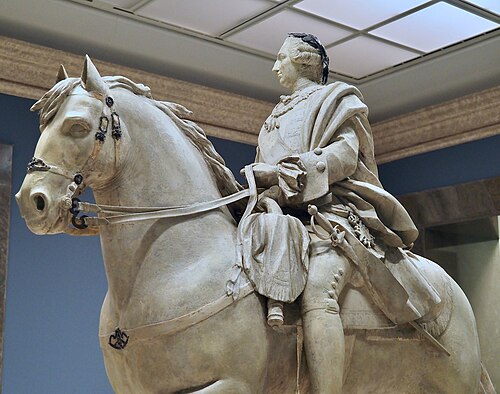
Juan Pascual de Mena / Manuel Álvarez de la Peña, "Charles III on Horseback", 1780 and after 1790. Wood covered with a thin layer of plaster, metal crown and fabric ties; 143 x 160 x 54 cm. Madrid, Royal Academy of Fine Arts of San Fernando, E-148. The horse and the king's body are believed to be the work of the sculptor Juan Pascual de Mena, as part of a 1778 model for an equestrian statue of King Philip V of Spain, while the current head, which represents Charles III instead of Philip V, is believed to be a later work by the sculptor Manuel Álvarez de la Peña, to adapt the old 1778 model to a different king after 1790. The equestrian monument to Charles III of Spain that can be seen today in Madrid's Plaza del Sol, commissioned by the city council in 1993, was cast in bronze based precisely on this 18th-century model.
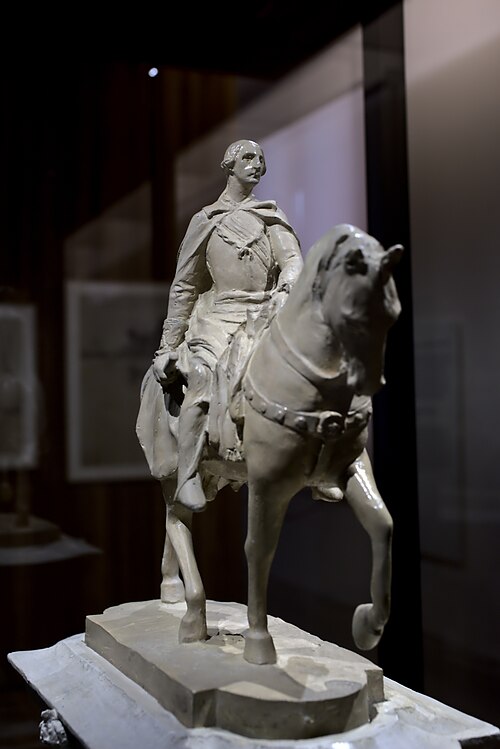
Model of the Equestrian portrait of King Charles III of Spain by Arturo Melida. Made in varnished plaster by Enrique García, 1910.

Urrutia, José De, and Lafora, Nicolas de. Map, which includes the Frontier, of the King's Dominions, in North America. 1769. Map. Retrieved from the Library of US Congress.
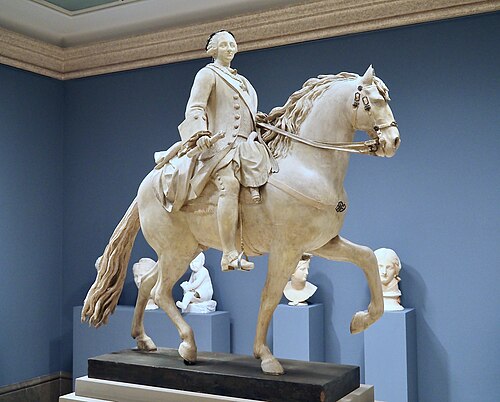
Juan Pascual de Mena / Manuel Álvarez de la Peña, "Charles III on Horseback", 1780 and after 1790. Wood covered with a thin layer of plaster, metal crown and fabric ties; 143 x 160 x 54 cm. Madrid, Royal Academy of Fine Arts of San Fernando, E-148. The horse and the king's body are believed to be the work of the sculptor Juan Pascual de Mena, as part of a 1778 model for an equestrian statue of King Philip V of Spain, while the current head, which represents Charles III instead of Philip V, is believed to be a later work by the sculptor Manuel Álvarez de la Peña, to adapt the old 1778 model to a different king after 1790. The equestrian monument to Charles III of Spain that can be seen today in Madrid's Plaza del Sol, commissioned by the city council in 1993, was cast in bronze based precisely on this 18th-century model.
סרטונים
שאלות ותשובות על קרלוס השלישי, מלך ספרד
מי היה קרלוס השלישי, מלך ספרד?
קרלוס השלישי, מלך ספרד היה מלך ספרד.
מתי נולד קרלוס השלישי, מלך ספרד?
קרלוס השלישי, מלך ספרד נולד ב-20 בינואר 1716.
מתי נפטר קרלוס השלישי, מלך ספרד?
קרלוס השלישי, מלך ספרד נפטר ב-14 בדצמבר 1788, בגיל 72.
איפה נולד קרלוס השלישי, מלך ספרד?
קרלוס השלישי, מלך ספרד נולד במדריד, ספרד.
במה עסק קרלוס השלישי, מלך ספרד?
קרלוס השלישי, מלך ספרד ידוע בעיקר בתור שליט (תפקיד).